Rubbish clearance near Tufnell Park station what to know
Posted on 02/09/2026

Rubbish clearance near Tufnell Park station: what to know before you book
If you are looking into rubbish clearance near Tufnell Park station, the first thing to know is that the best service is not always the cheapest or the fastest on paper. Around a busy station, access, timing, parking, and loading can matter just as much as the size of the job. Miss one of those details and a simple clearance can turn awkward very quickly.
Maybe you are clearing a flat before a move, removing old furniture after a tidy-up, or dealing with a pile of bagged waste that has been sitting in the hallway for far too long. Truth be told, most people just want it gone without stress. This guide walks you through how clearance works near Tufnell Park station, what to check, what to avoid, and how to choose the right approach for your situation. It is practical, local, and built to save you a bit of time and hassle.
Why Rubbish clearance near Tufnell Park station what to know matters
Station areas are different. You have more people moving through, tighter kerb space, and a bit less patience for anything blocking a path. That is why rubbish clearance near Tufnell Park station is really about planning, not just collection. A good clearance is one that works around real-world conditions: narrow residential streets, flats above shops, shared entrances, and the general London dance of finding somewhere to stop for five minutes without upsetting the world.
Near a station, timing often shapes everything. Early mornings may be calmer for loading. Later in the day, pedestrian traffic can make a simple lift-and-load job feel a lot more fiddly. If you are on the third floor, or you have bulky items like wardrobes or broken desks, the difference between a smooth job and a headache is usually in the preparation.
There is also the trust angle. Any waste removal service should be clear about what they take, how they dispose of items, and whether they handle mixed loads responsibly. If you are clearing rubbish from a flat, office, loft, or garden, you want the process explained plainly, not wrapped in vague promises. That is where a clear service overview helps, and you can start by looking at the rubbish removal services overview for a sense of the broader options available.
And yes, it matters for the environment too. A sensible clearance should separate reusable and recyclable items where possible. Nobody expects perfection, but good practice should at least be visible.
Expert takeaway: near a station, the best clearance service is the one that balances access, timing, safety, and lawful disposal without making you chase details.
How Rubbish clearance near Tufnell Park station what to know works
Most rubbish clearance jobs follow a similar pattern, but the local logistics change the feel of the job. Around Tufnell Park station, the usual flow is: you describe the load, the team estimates the volume or visits to assess it, a time is booked, and the waste is removed from the property or kerbside. Simple enough on paper. In reality, the details matter.
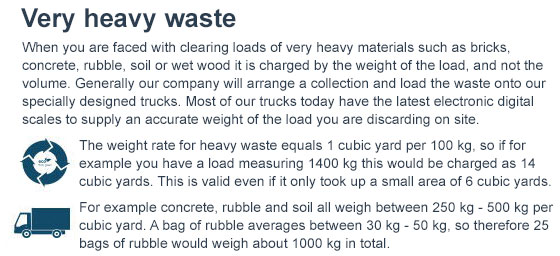
For a small household clearance, you might only need a quick collection of black bags, an old armchair, or a few pieces of broken furniture. For larger jobs, such as a loft clear-out or post-renovation waste, the team may need to plan for heavier lifting, extra labour, and the right vehicle size. If the job involves construction debris, it is worth checking a specialist route like builders waste clearance in Tufnell Park rather than assuming every clearance service handles the same materials in the same way.
Good operators usually ask questions that sound almost too basic: What floor are you on? Is there lift access? Is there rear access? Can a van stop nearby? Those questions are not filler. They are how the job gets priced and planned properly. Near a station, the answer to "can we park close enough?" can make the difference between a quick turnaround and a slow, messy afternoon.
If you are comparing clearance versus skip hire, think in terms of convenience. A skip can work well if you have space and time, but it often requires more planning and more physical loading from you. A collection service tends to be better when access is awkward or you want the team to do the lifting. For straightforward pickups, rubbish collection in Tufnell Park is often the most direct option.
There is one more thing people sometimes miss: documentation. If you are clearing business waste or mixed waste, ask what happens after collection. The answer should be plain and sensible, not overly technical. You do not need a lecture. You do need confidence that the waste is being handled properly.
Key benefits and practical advantages
A well-run rubbish clearance saves more than time. It removes the little points of friction that keep a household or business feeling cluttered and slightly stuck. Near a station, that matters even more because space is at a premium and you can feel every extra bag in a hallway.
- Less disruption: items are removed quickly, often in one visit.
- Better access planning: teams familiar with local streets can work more efficiently.
- Safer lifting: you avoid dragging heavy items through stairwells or shared entrances.
- Cleaner finish: a proper clearance leaves the space usable, not half-done.
- More flexible than skip hire: useful where kerb space is limited or loading is awkward.
- Improved recycling outcomes: useful items can often be separated before final disposal.
For many people, the biggest advantage is mental. A room full of old furniture or builder's offcuts can make a flat feel smaller than it is. Once it is gone, everything changes a bit. The light looks different. The room breathes. Slightly dramatic, maybe, but anyone who has stood in a cleared front room at 8am on a grey London morning knows the feeling.
If you are planning a move, refurbishment, or business reset, this also helps with scheduling. A tidy, empty space is easier to measure, clean, decorate, or hand over. It can also make your next task feel less intimidating, which is no small thing when you are already juggling keys, contracts, or contractors.
For readers interested in how waste removal connects to broader day-to-day services, the waste removal in Tufnell Park page can be a useful companion.
Who this is for and when it makes sense
This kind of service is useful for more people than you might think. It is not just for major clearances or end-of-tenancy panic. In practice, rubbish clearance near Tufnell Park station suits small, medium, and awkward jobs where convenience matters.
You may need it if you are:
- moving out of a flat and need to clear leftover items
- refreshing a rental or preparing a property for sale
- clearing a loft, garage, basement, or storage cupboard
- removing old sofas, mattresses, desks, or white goods
- dealing with renovation waste after DIY or contractor work
- emptying an office, studio, or workspace
- sorting out garden debris after a seasonal tidy-up
There are also practical situations where a clearance service is simply the cleanest choice. For example, if you are in a top-floor flat with no lift and a heavy wardrobe that no one wants to argue with. Or if a builder has left you with a mound of mixed rubble, timber, packaging, and offcuts after a quick job that was not as tidy as promised. Happens all the time.
In those cases, specialist services such as house clearance in Tufnell Park, office clearance, or furniture disposal may be more suitable than a general one-off pickup. Matching the service to the job makes the whole thing smoother and usually better value too.
Step-by-step guidance
If this is your first time arranging rubbish clearance near Tufnell Park station, here is the simplest way to approach it without overthinking the whole thing.
- List what needs removing. Be specific. "Old stuff" is not enough. Write down furniture, bags, electricals, garden waste, rubble, or mixed items.
- Separate the obvious categories. Keeping recyclables, reusable items, and general waste apart can help with planning.
- Check access. Note floor level, stairs, lift access, parking options, and whether the items are in a front room, loft, or out back.
- Ask how the quote is built. Is it based on volume, labour, type of waste, or all three? A clear answer is a good sign.
- Confirm what cannot be taken. Some materials may need specialist handling, so it is better to ask early.
- Choose a time that reduces disruption. If possible, pick a quieter slot for your building or street.
- Prepare the items safely. Move smaller objects into one place, tape up loose bags, and make sure paths are clear.
- Check the finish. Once the load is gone, look for missed items, debris, or anything that should have been included.
That last step is easy to skip. Don't. A quick look around the room, hallway, or garden often catches one stubborn item that everyone forgot about. It might be a dusty side table or a single broken chair leg, but these things have a strange talent for hiding.
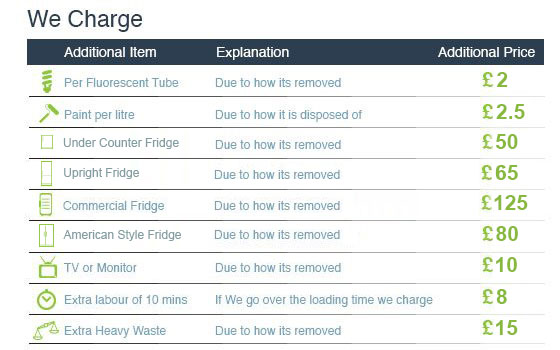
If you are comparing quotes, you may also want to look at pricing and quote information before making a decision. Transparent pricing is often the clearest sign that a service is set up properly.
Expert tips for better results
Over time, a few habits make rubbish clearance much easier. Nothing fancy. Just the kind of practical detail that avoids the usual headaches.
Tip 1: book before the clutter becomes urgent. When people leave clearance until the last minute, they usually pay in stress rather than money. If you know a move, renovation, or handover is coming, book ahead where you can.
Tip 2: be honest about the volume. Underestimating the load is common. It is much better to say "I think it is about a van load, maybe more" than to pretend it is just a couple of bags.
Tip 3: think about what can be reused. A service that sorts for reuse and recycling can be better for both the environment and your conscience. If that matters to you, have a look at the company's approach to recycling and sustainability.
Tip 4: keep key documents and valuables separate. Sounds obvious, but in a busy clear-out, passports, contracts, chargers, spare keys, and sentimental bits can end up in the wrong pile. It happens.
Tip 5: plan around the building. If you share an entrance, notify neighbours or the building manager if needed. It is a small courtesy that can prevent a grumble later on.
Tip 6: ask about insurance and safety. Professional handling matters when items are heavy, awkward, or going down stairs. You want someone who treats that as part of the job, not a bonus. You can read more about the company's stance on insurance and safety.

Common mistakes to avoid
A lot of clearance problems are avoidable. Not all of them, obviously. London throws the odd curveball. But many are simply down to rushed planning or assumptions.
- Assuming every waste type is treated the same. Mixed loads, furniture, green waste, and builder's waste may need different handling.
- Leaving access details out. A service cannot plan properly if it does not know about stairs, parking, or rear-entry access.
- Choosing only on price. Cheap can be fine, but if the quote is vague, it may be cheap for a reason.
- Not asking what is included. Labour, loading, disposal, and extra lifting may not all be bundled in the same way.
- Forgetting bulky items. One sofa, one mattress, or one broken wardrobe can change the load more than people expect.
- Ignoring building rules. If your block has preferred loading hours or access rules, it is worth checking before the team arrives.
One of the more common errors, to be fair, is trying to "help" by dragging everything downstairs before the team arrives. For small bags, fine. For a heavy cabinet, not so much. Back injuries are not a badge of honour.
Another easy miss is booking the wrong service type. If your job is mainly boxes and household clutter, you probably do not need a specialist clearance designed for larger structural waste. On the other hand, if you have rubble, plasterboard, and timber, a general junk collection may not be the right fit. A bit of judgement saves a lot of faff.
Tools, resources and recommendations
You do not need a toolkit the size of a builder's van, but a few simple things make the process easier.
- Sturdy bags or boxes: useful for grouping smaller items.
- Gloves: especially if you are sorting dusty loft contents or garden waste.
- Marker pens or labels: handy when separating keep, donate, and remove piles.
- Tape and ties: useful for securing bags or wrapping loose items.
- Clear floor space: even a narrow run helps the team work faster and more safely.
For more specialised jobs, it can help to look at related service pages. If you are clearing an attic or storage area, loft clearance may be a better fit. If the job is mostly garage clutter, garage clearance is worth considering. For overgrown borders, soil bags, and branch cuttings, garden waste removal is usually the cleaner option.
If you are not sure which route suits your job, a clear conversation is usually enough. Describe the mess, describe the access, and ask for the most suitable method. There is no prize for guessing badly.
Law, compliance, standards and best practice
Waste disposal in the UK is not something to take casually. You do not need to become an expert in regulations, but you do need to use a provider that understands legal disposal duties and sensible waste handling. That includes checking that waste is removed responsibly, taken to appropriate facilities, and not dumped somewhere it should not be.
For householders and businesses alike, the safest mindset is simple: ask what happens to the waste after collection, and make sure the answer is clear. If items are being reused, recycled, or transferred for proper disposal, that should be part of the service story. If the provider cannot explain that in plain English, I would be cautious.
For commercial clearances, the standard of care should be a little higher still. Office waste can include confidential papers, electronics, mixed recyclables, and heavy furniture. If that sounds like your situation, a dedicated office clearance service is often the safer and neater route.
Best practice also means honest pricing, safe lifting, and respect for shared spaces. That may sound basic, but basic is good. Basic is what keeps jobs tidy, lawful, and uneventful in the best possible way.
Options, methods, or comparison table
There is more than one way to clear waste near Tufnell Park station. The right choice depends on access, volume, urgency, and how much you want to do yourself.
| Method | Best for | Pros | Watch out for |
|---|---|---|---|
| Man-and-van style clearance | Mixed household waste, furniture, smaller clear-outs | Flexible, fast, usually low disruption | Needs accurate volume description and access details |
| Skip hire | Longer jobs, ongoing DIY, larger volumes | Good for staged loading, can suit bigger projects | Needs space, permits may be relevant, you do the loading |
| Specialist builders waste clearance | Renovation rubble, timber, construction debris | Better suited to heavy or awkward materials | Not always ideal for mixed household items |
| Targeted item disposal | Single furniture items or specific categories | Simple, focused, tidy | Less useful for larger mixed loads |
If you are mainly dealing with one or two bulky items, targeted disposal may be enough. If the job has grown legs and now includes random stuff from three rooms, a fuller clearance service is probably the smarter move. It saves multiple trips, which nobody enjoys, especially in wet weather.
Case study or real-world example
A fairly typical local scenario goes like this. A couple living in a flat not far from Tufnell Park station decides to clear out before a move. At first, they think it is just a few bags and an old sofa. Then the wardrobe comes into play. Then the broken desk. Then the boxes from the cupboard under the stairs. You know how it goes.
They list everything, check access, and realise the building stairwell is narrow and the street parking is tight by lunchtime. So they choose an early slot. They also separate a small pile of books and kitchenware to keep, and leave the rest ready for collection. The team arrives, loads efficiently, and the flat is empty before the day gets busy.
Nothing dramatic happened. Which is exactly the point.
The move felt less chaotic, the hallway stayed clearer, and they did not spend the evening arguing with a wardrobe that refused to fit round a corner. That is what a good clearance service should do: remove friction, not add to it.
In a nearby business scenario, an office team might use a similar approach before handing back keys. Desks, chairs, monitors, and archive boxes are grouped separately. The provider comes prepared for a mixed load and removes it in one go. No heroics. Just an orderly end to a messy chapter.
Practical checklist
Use this checklist before your rubbish clearance booking:
- Make a simple list of everything to remove.
- Separate items by type if you can.
- Measure large furniture or awkward items.
- Check stairs, lifts, and doorway widths.
- Note parking or loading restrictions near the property.
- Decide whether any items are keep, donate, recycle, or dispose.
- Confirm what the provider will and will not take.
- Ask how pricing is calculated.
- Check whether labour and disposal are included.
- Make sure the path to the load is safe and clear.
- Keep valuables, documents, and personal items out of the clearance zone.
- Ask for a suitable time window if access is tight around the station.
If you are sorting out the home as part of a move or purchase, it may also be helpful to read about purchasing property in Tufnell Park or the local area perspective in why locals love living in Tufnell Park. It gives a better sense of the neighbourhood rhythm and the kind of practical planning that local properties sometimes need.
Conclusion
Rubbish clearance near Tufnell Park station is mostly about making a practical job feel easy. When the access is tight, the streets are busy, and the schedule is already full, a little planning goes a long way. Know what you need removed, be clear about the access, choose the right service type, and ask the questions that actually matter.
That is the whole trick, really. Not glamorous, but very effective.
If you want a smoother experience, look for a provider that explains pricing clearly, handles waste responsibly, and respects the realities of local access. It should feel organised from the first conversation to the final sweep-up. And if you are still comparing options, keep in mind that a good clearance service is one that leaves you feeling lighter, not more confused.
Get a free quote today and see how much you can save.
Sometimes the best outcome is simple: an empty space, a clear floor, and the quiet satisfaction of getting it done properly.


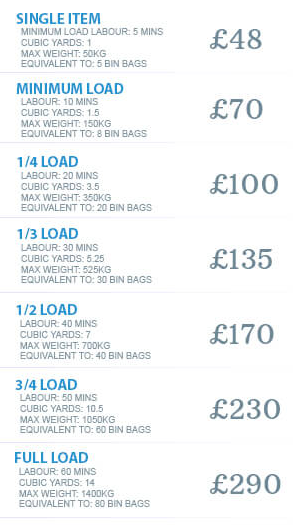
 Tipper Van - Rubbish Removal and Waste Disposal Prices in Tufnell Park, N7
 Luton Van - Rubbish Removal and Waste Disposal Prices in Tufnell Park, N7